

.png)


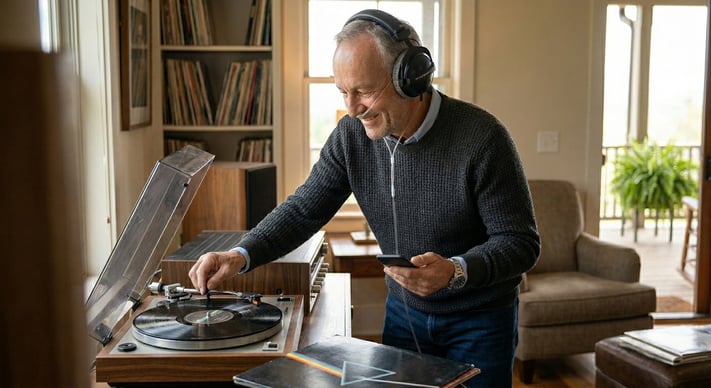
The quieter parts of life are worth designing with intention — especially when your breathing needs a little extra support.
There's a tendency, when managing a health condition, to organize life around appointments, medications, and logistics. These things matter. But so does the texture of an ordinary afternoon. The things you do to relax, restore, and simply be — these deserve as much intention as anything else in your routine.
For oxygen users, building a genuinely restful and enjoyable daily rhythm isn't just a nice-to-have. It's part of what makes long-term health management sustainable.
Music as Medicine
The effect of music on the body is well-studied and genuinely impressive. Slow, calming music reduces heart rate, lowers blood pressure, relaxes muscle tension, and activates the parasympathetic nervous system — the part of the nervous system responsible for rest and recovery.
For oxygen users specifically, listening to calming music during rest periods can help slow and deepen breathing naturally. Some people find that music with a slow, steady tempo gives them something to breathe along with — without even trying.
Build a playlist that you associate with your rest time. Over time, your nervous system will begin to associate those songs with relaxation, and the transition into a restful state will become faster and easier.
Reading and Audiobooks
Reading is one of the most absorbing, low-exertion activities available to us. A good book pulls attention out of the body and into a story, which is a surprisingly effective way to give your nervous system a break from the vigilance that chronic health conditions can generate.
If holding a book or reading small text is tiring, e-readers with adjustable font sizes and backlighting are a comfortable alternative. Audiobooks are another wonderful option — you can listen while resting with your eyes closed, while doing gentle stretches, or while sitting on the porch in the morning light.
.jpeg?width=1200&height=359&name=WhatsApp%20Image%202025-12-05%20at%2000.55.28%20(1).jpeg)
Breathwork and Gentle Mindfulness
Conscious breathing practices — done gently and at your own comfort level — can be a meaningful part of a daily routine for oxygen users. Pursed-lip breathing, diaphragmatic breathing, and simple box breathing techniques are all tools that pulmonary rehab programs teach for good reason: they improve breath control, reduce anxiety, and help you feel more capable.
You don't need an app or a formal practice. Even five minutes of slow, intentional breathing in a comfortable chair can reset your nervous system and noticeably shift your mood.
Designing Your Rest Spaces
The places you relax deserve as much thought as the rest of your home. A comfortable chair positioned near good natural light. A small table within reach for your water, your book, and your remote. Your portable concentrator is set up quietly nearby. Soft background music if you like it. These small design choices make your rest time feel like a choice rather than a limitation.
The Power of Routine
When your day has a gentle, reliable structure — a morning walk, a midday rest, an evening of music and reading — your body learns what to expect. Predictability is deeply calming for the nervous system, and a calm nervous system supports better breathing.
You don't need a rigid schedule. You need a rhythm. A loose sequence of moments that your body recognizes as home.
LPT Medical is here to support your whole life — not just your oxygen prescription. From lightweight portable concentrators to home accessories that make your daily routine easier, our team is ready to help. Reach out to us today.
Questions? Call us! We are here to help 800-946-1201