

.png)


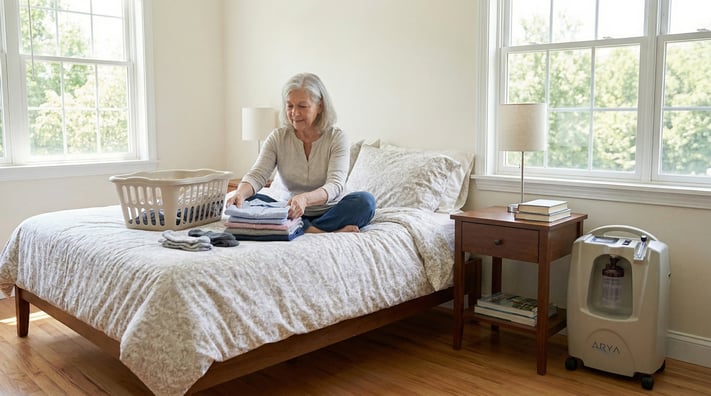
A few thoughtful changes to your living space can make a big difference in how comfortable and confident you feel every day.
Your home is the center of your oxygen therapy routine. It's where you sleep, eat, recharge, and spend the majority of your time. When your living space is set up to support your oxygen needs — rather than working against them — the difference in daily comfort and ease can be significant.
You don't need to renovate. These are practical, affordable adjustments that any oxygen user can make.
Create a Dedicated Equipment Station
Give your home concentrator a permanent, intentional home —not just wherever it ends up. Ideally, this is a location that is:
- Near a power outlet, so cords aren't stretched across walkways
- In a well-ventilated area with at least a foot of clearance on all sides (concentrators pull in room air and need airflow)
- Away from heat sources, direct sunlight, and dusty corners
- Accessible but not in the middle of a traffic area, where the tubing could be a trip hazard
- Using tubing clips along baseboards to keep the cannula tubing against the wall
- Choosing a cannula length that gives you enough reach without excess slack on the floor
- Using a cannula swivel connector so you can turn without twisting the tubing
- Running your HVAC filter on a regular schedule — clogged filters circulate dust and allergens that make breathing harder
- Keeping windows open when the weather and outdoor air quality permit, for fresh air circulation
- Avoiding candles, incense, and strong aerosol sprays near your oxygen equipment (oxygen accelerates combustion — this is a genuine safety consideration)
- An air quality monitor can help you understand what's happening in your home environment. LPT Medical carries the ARYA Guardian Air Quality Monitor for exactly this purpose.
A small table or shelf near your most-used chair is a great starting point. If you move between rooms frequently, consider whether a second unit or a longer cannula tubing length makes sense for your setup.
.jpeg?width=1200&height=359&name=WhatsApp%20Image%202025-12-05%20at%2000.55.28%20(1).jpeg)
Manage Tubing Safely
Oxygen tubing on the floor is a fall risk — full stop. This is one of the most important home safety adjustments any oxygen user can make. Strategies that work well include:
If you have pets, be aware that they may chew or pull on tubing. Keep excess length tucked away when possible.
Think About Air Quality
Your home’s air quality plays a bigger role than many people realize. It doesn’t just affect comfort. It can directly impact how effective your oxygen therapy feels day to day. Clean, well-circulated air helps you breathe easier, while poor air quality can make symptoms feel worse, even when you’re using your oxygen as prescribed.
Consider the air you’re breathing indoors. Dust, pet dander, smoke, and strong household cleaners can all irritate your lungs. Keeping surfaces clean, vacuuming regularly, and using gentle, low-odor products can make a noticeable difference. Even small changes can help reduce irritation and make breathing easier.
Humidity is another key factor. Air that’s too dry can leave your airways feeling irritated, while air that’s too humid can feel heavy and uncomfortable. Finding a balanced level in your home helps create a more comfortable breathing environment and supports your oxygen use.
Ventilation also matters. Opening windows when the weather allows or using proper air circulation helps refresh the air inside your home. Stale air can trap irritants, while fresh airflow helps keep things lighter and easier to breathe.
Taking a few simple steps to improve your home’s air quality can help your oxygen therapy feel more effective and make your everyday environment more comfortable. It’s not about perfection. It’s about creating a space that supports your breathing and your overall well-being.
Make Your Bedroom a Sleep Sanctuary
Since good sleep is so fundamental to respiratory health, your bedroom deserves particular attention. Keep it cool, dark, and quiet. Position your home concentrator close enough for the tubing to reach your bed comfortably, but far enough that the hum doesn't disturb your sleep.
A bedside tray or small table makes it easy to keep your water, medications, and any other essentials within reach without getting up.
Think About Furniture and Flow
Furniture that's easy to get in and out of — chairs with arms, a bed at the right height, clear pathways between rooms — all contribute to a home that supports rather than frustrates your daily movement. This matters more when you're managing your breathing in relation to your environment.
LPT Medical carries smart accessories that help you create the best possible breathing environment at home. Ask our team what's right for your setup.
Questions? Call us! We are here to help 800-946-1201